
 Save
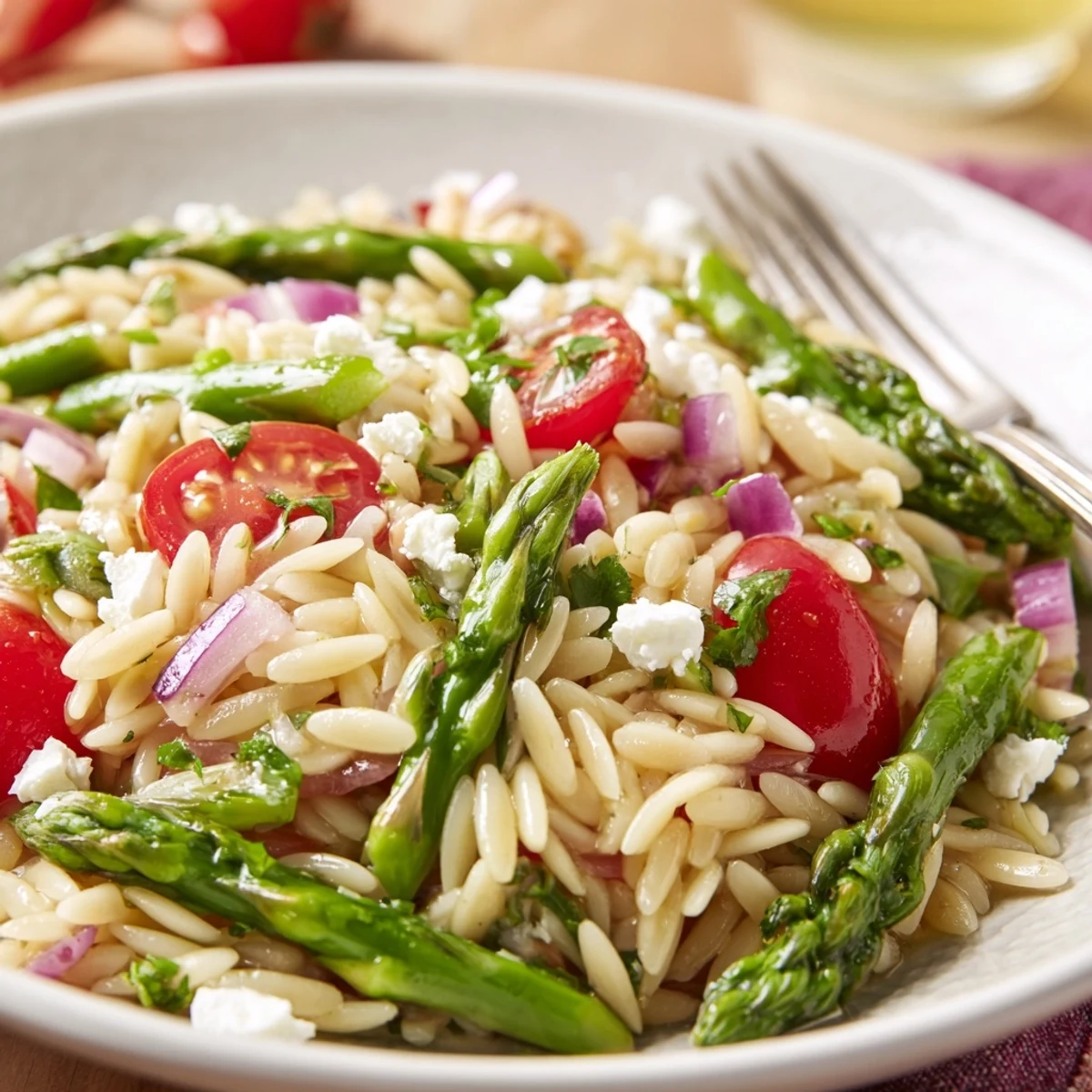
Save This vibrant asparagus and orzo salad pairs al dente orzo with blanched asparagus, halved cherry tomatoes and red onion, all tossed in a bright lemon vinaigrette. Finish with chopped parsley and optional crumbled feta. Cook the orzo until just tender, add asparagus for the last two minutes, cool under cold water, then dress and chill briefly. Ideal for spring gatherings or a light, make-ahead lunch.
When I first put together this salad on a breezy afternoon, it was the lemon that caught my attention: bright, sharp, and unexpectedly cheerful. The kitchen smelled of just-blanched asparagus and sweet tomatoes as warmth from the boiling orzo fogged up my glasses. I remember grinning as I whisked the vinaigrette with a little more vigor than necessary, half from anticipation and half from the satisfaction of using up that lonely bunch of asparagus. There’s something about zesty, fresh salads that invites you to sit down and actually taste your lunch, even if it’s just with yourself and the birds outside the window.
One spring, I made this for a quick dinner when a friend showed up with a bottle of Sauvignon Blanc and a stack of good gossip. We balanced bowls in our laps, dipping asparagus pieces in the extra vinaigrette, and agreed it tasted like sunshine in a bowl. The whole thing felt effortless, and that made it taste even better. I’ve chased that feeling of low-key celebration with this salad ever since.
Ingredients
- Asparagus: The key to keeping this crisp is to trim off the woody ends – I snap instead of cut, which always works like a charm.
- Cherry tomatoes: Their sweetness softens the lemon’s zing and adds juicy bites throughout.
- Red onion: A little bit goes a long way, but I soak diced onion in cold water for a few minutes to mellow any sharpness.
- Fresh parsley: Don’t skip this; it wakes up all the flavors and makes the salad taste ‘alive’.
- Orzo pasta: Looks like fat rice, cooks like a dream, and loves soaking up vinaigrette.
- Feta cheese: I crumble it with my fingers for uneven, creamy chunks – optional, but so good.
- Extra virgin olive oil: Brings richness to the dressing, and the better the oil, the better the vinaigrette.
- Fresh lemon juice: Only freshly squeezed will do for the brightest punch; bottled just isn’t the same.
- Lemon zest: This is the secret to making every bite sing, so don’t skip zesting before juicing.
- White wine vinegar: Adds lift and keeps everything tasting vibrant, even after sitting in the fridge.
- Dijon mustard: A little dash ties the vinaigrette together and helps it emulsify.
- Garlic: I grate it in for even flavor; once, I forgot it and the salad felt flat.
- Salt: I add a pinch to both the cooking water and the dressing to layer up the flavor.
- Black pepper: I like to add extra at the end, just before serving, for a little bite.
Instructions
- Boil and blanch:
- Bring a big pot of salted water to a rolling boil, listening for that first hiss of steam. Drop in the orzo and, just before it finishes, toss in the asparagus so both stay beautifully green and firm.
- Make the lemon vinaigrette:
- Whisk together olive oil, fresh lemon juice, lemon zest, vinegar, mustard, garlic, salt, and pepper in a small bowl until it looks creamy and smells like kitchen sunshine.
- Mix the vegetables:
- In a large bowl, combine orzo, bright asparagus, cherry tomatoes, diced onion, and parsley. Give it a friendly toss so everything mingles evenly.
- Toss with vinaigrette:
- Drizzle the zippy lemon vinaigrette over your mix, toss until every bit looks glossy and lively.
- Finish with feta:
- Gently fold in crumbly feta cheese if you’re using it and admire the creamy pops against the green and red.
- Season and serve:
- Taste for salt and pepper, adjust as needed, and serve chilled or at room temp for the best flavors to shine through.
 Save
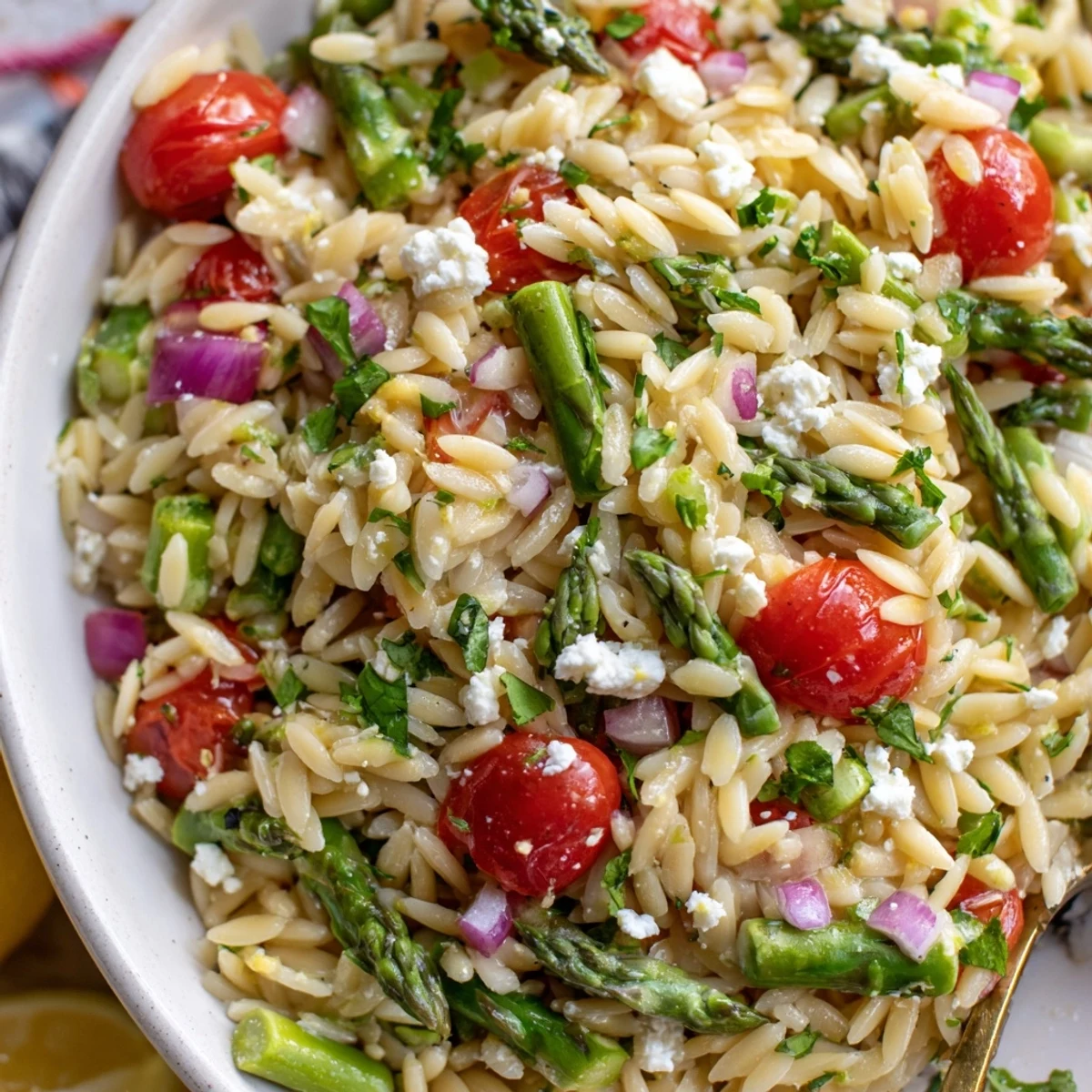
Save I’ll never forget when my niece, who claims to hate ‘green things’, sneaked extra helpings when I brought this to a family picnic. Watching her pick around the feta but go back for more orzo and asparagus made me realize food wins you over with simple, honest flavors. That’s when this salad became more than a recipe to me; it became my go-to for winning over the skeptics with something fresh and pretty.
Letting Flavors Mingle Is Key
If you make this a couple hours ahead, the vinaigrette soaks into the pasta and vegetables, making every bite more flavorful. I love how the onion mellows and the herbs perk up – the salad only gets better as it sits. Just give it a quick toss before serving to bring it back to life. There’s rarely any left for the next day, but if there is, the leftovers are always welcome.
Quick Fixes for Leftovers
Leftover salad isn’t a problem if you get a little creative. Sometimes I toss in a handful of arugula or spinach right before serving for bonus greens. I’ve even added a splash more lemon juice to wake it up after a night in the fridge. Cold or at room temperature, you can’t really go wrong.
What Else to Pair With This Salad
This salad shines next to simple proteins or as the main star for lunch. Once, I served it alongside grilled shrimp skewers for a light dinner on the patio, and even the meat lovers asked for seconds. Try it with grilled tofu or chickpeas for a heartier meal, or keep it classic with just some crusty bread.
- If you’re making it a day ahead, hold off on adding the feta until just before serving.
- A switch to dill or basil in place of parsley gives a new personality each time.
- Don’t forget to double-check the orzo for doneness – mushy orzo is no one’s friend.
 Save
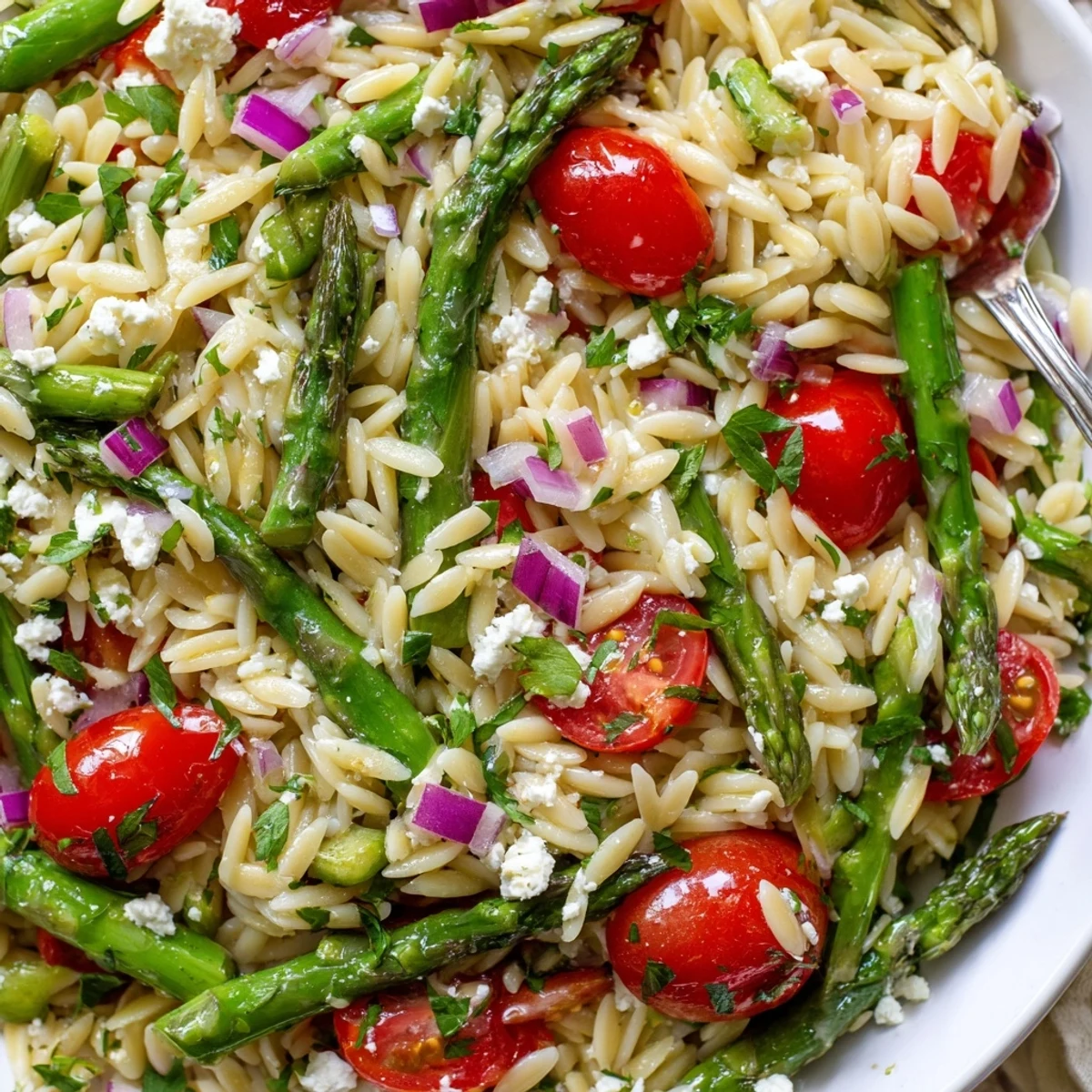
Save This Asparagus Orzo Salad is proof that simple ingredients and a bright vinaigrette can make any meal feel a bit more special. Hope it brings some sunshine to your own kitchen adventures.
Recipe FAQs
- → How long should I cook the orzo?
-
Cook orzo in plenty of salted boiling water for 8–10 minutes until al dente. Taste early to avoid overcooking; it should have a slight bite that holds up when dressed.
- → When should I add the asparagus?
-
Add asparagus to the boiling orzo during the final 2 minutes so it becomes crisp-tender. Immediately drain and rinse under cold water to stop cooking and preserve color.
- → How can I keep the dressing from separating?
-
Whisk lemon juice, vinegar, mustard and garlic first, then slowly drizzle in olive oil while whisking to emulsify. Mustard acts as an emulsifier and keeps the vinaigrette smooth.
- → What are good protein additions?
-
Grilled chicken, shrimp or roasted chickpeas work well—add them cooled or at room temperature so they don’t wilt the salad. Toss gently to combine.
- → How should I store leftovers?
-
Keep dressed salad in an airtight container in the fridge for up to 2–3 days. For best texture, store vinaigrette separately and toss just before serving.
- → Can I make substitutions for the herbs and cheese?
-
Yes—swap parsley for dill or basil for a different aromatic note. Omit the feta for a vegan option or replace with a plant-based alternative for similar creaminess.